Setting Realistic Goals for Dollar Buy Sell Trading
Discover the very best Approaches to Enhance Your Dollar Purchase Offer Purchases for Maximum Earnings
Maximizing buck buy-sell deals calls for a calculated method. Market patterns play a vital function in timing purchases effectively. Technical evaluation can give understandings right into possible access and departure points. In addition, methods like dollar-cost averaging and risk management are vital for protecting financial investments. Recognizing these methods can significantly boost earnings potential. What particular methods should one prioritize to optimize returns?
Recognizing Market Fads and Timing Your Purchases
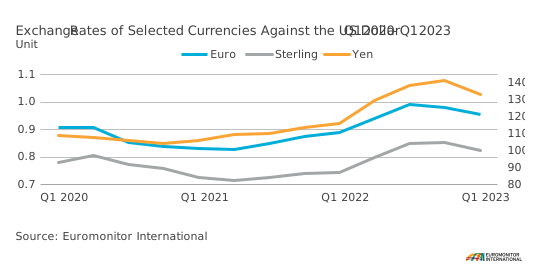
Although market patterns can be unpredictable, comprehending their dynamics is essential for optimizing buck buy-sell deals. Capitalists and investors should acknowledge that market variations are affected by numerous variables, including economic indicators, geopolitical events, and consumer belief. By remaining informed regarding these components, individuals can much better anticipate prospective price motions and change their approaches appropriately.
Timing is additionally essential; performing deals at the ideal moment can significantly influence productivity. A well-timed buy can take advantage of lower rates, while a tactical sell can maximize optimals. Observing existing trends and historical data allows investors to determine patterns that may suggest when to leave the market or get in.
Ultimately, an extensive understanding of market fads and timing boosts the likelihood of effective transactions, enabling individuals to browse the intricacies of buck buy-sell tasks with greater self-confidence and efficiency.
Utilizing Technical Analysis for Informed Choice Making
Comprehending market trends and timing deals can be greatly improved with the application of technological analysis. This analytical technique entails analyzing historical cost motions and trading volumes to determine patterns that can anticipate future market behavior. By making use of numerous charting tools and indicators, such as relocating standards and relative toughness index (RSI), capitalists can acquire understandings right into possible entry and exit points for their dollar buy market purchases.
Technical analysis permits investors to separate between short-term changes and long-lasting trends, allowing them to make informed choices. By observing assistance and resistance degrees, they can determine market belief and establish suitable trading approaches. In addition, acknowledging patterns such as head and shoulders or dual bases can signify prospective reversals or continuations. Ultimately, leveraging technical analysis gears up financiers with an organized strategy to browse the complexities of the market, improving their potential for optimizing profits in dollar buy market transactions.
Implementing Dollar-Cost Averaging for Constant Financial Investment
Carrying out dollar-cost averaging (DCA) can supply a disciplined approach to spending, especially in unstable markets. This method involves constantly investing a dealt with amount of money at regular intervals, no matter of market problems. By doing so, financiers can lower the impact of market variations on their overall investment portfolio.
In addition, by devoting to a set financial investment schedule, people can avoid the challenges of attempting to time the marketplace, which often causes missed out on possibilities. In general, DCA cultivates a practice of regular investing, lining up with a technique intended at constant growth and possible earnings maximization in time
Leveraging Stop-Loss and Take-Profit Approaches
Efficient administration of financial investment risk can substantially improve trading outcomes, and leveraging stop-loss and take-profit strategies is an essential component of this approach. Stop-loss orders instantly offer a safety when it gets to a predetermined rate, reducing prospective losses and offering a safeguard for traders. This aggressive step allows capitalists to handle their risk direct exposure without continuous monitoring.
On the other hand, take-profit orders secure gains by marketing a safety and security once it hits a defined price target - Dollar Buy Sell. This technique guarantees that traders can utilize on higher price movements while avoiding the mistakes of emotional decision-making. By establishing clear exit points through these methods, investors can keep technique and stick to their trading strategies. Inevitably, the efficient use stop-loss and take-profit strategies not just safeguards resources but also assists in maximizing success throughout dollar buy-sell deals
The Importance of Diversity in Buck Buy Offer Transactions
While some traders might focus entirely on certain possessions, the importance of diversification in buck buy-sell transactions can not be overemphasized. Diversity entails spreading financial investments across different property classes, sectors, or geographical regions to minimize danger. By branching out, traders can minimize the effect of poor performance in any type of single financial investment, as gains in other locations can assist offset losses.
A well-diversified profile is extra likely to produce constant returns over time. It makes it possible for investors go to the website to capitalize on various market conditions, as different properties normally react in different ways to financial changes. This method not just minimizes risk you can look here but likewise improves the potential for profit maximization.
In the context of buck buy-sell purchases, diversification can result in higher liquidity and versatility. As market characteristics change, having a diversified technique permits traders to adapt rapidly, making informed decisions that align with their overall investment goals.
Frequently Asked Questions
How Do Tax Obligations Effect My Dollar Get Sell Purchases?
Taxes greatly influence dollar buy-sell transactions by lowering internet revenues with funding gains tax obligations. The timing of sales and specific tax braces also influence general returns, compelling financiers to plan appropriately for excellent economic results.
What Are the Common Blunders to Prevent in Buck Purchases?
Typical blunders in dollar purchases include stopping working to track expenditures, ignoring market trends, ignoring fees, not branching out financial investments, and making impulsive decisions. Awareness of these challenges can enhance decision-making and boost general purchase end results.
Exactly How Can I Track My Investment Efficiency Efficiently?
To track financial investment performance properly, one ought to make use of financial software program or spread sheets, on a regular basis review account statements, assess profile diversification, and criteria against pertinent indices to assess returns and make enlightened modifications to strategies.
Exist Details Trading Systems Recommended for Dollar Purchases?
A number of trading platforms are recommended for dollar deals, including copyright, E * TRADE, and TD Ameritrade. These systems use straightforward user interfaces, low costs, and durable devices, making them appropriate for both amateur and experienced financiers.
What Resources Can I Use for Ongoing Market Education And Learning?
Various sources exist for ongoing market education and learning, including online courses, webinars, financial news internet sites, podcasts, and financial investment publications. Involving with these materials helps individuals remain informed and enhance their trading expertise and approaches efficiently.
Market patterns play an important function in timing transactions effectively. Market trends can be uncertain, recognizing their characteristics is necessary for maximizing dollar buy-sell transactions. Dollar Buy Sell. Understanding best site market trends and timing transactions can be greatly enhanced through the application of technological evaluation. While some investors may focus only on certain properties, the relevance of diversity in dollar buy-sell purchases can not be overstated. Common blunders in buck transactions include falling short to track expenditures, overlooking market fads, overlooking fees, not diversifying financial investments, and making spontaneous decisions